By Steven Cummings
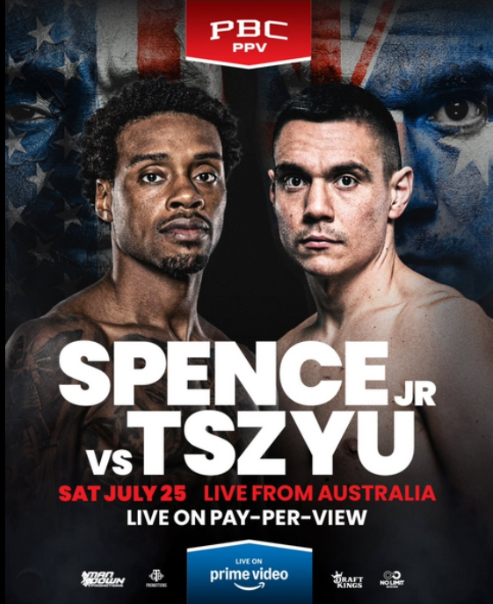
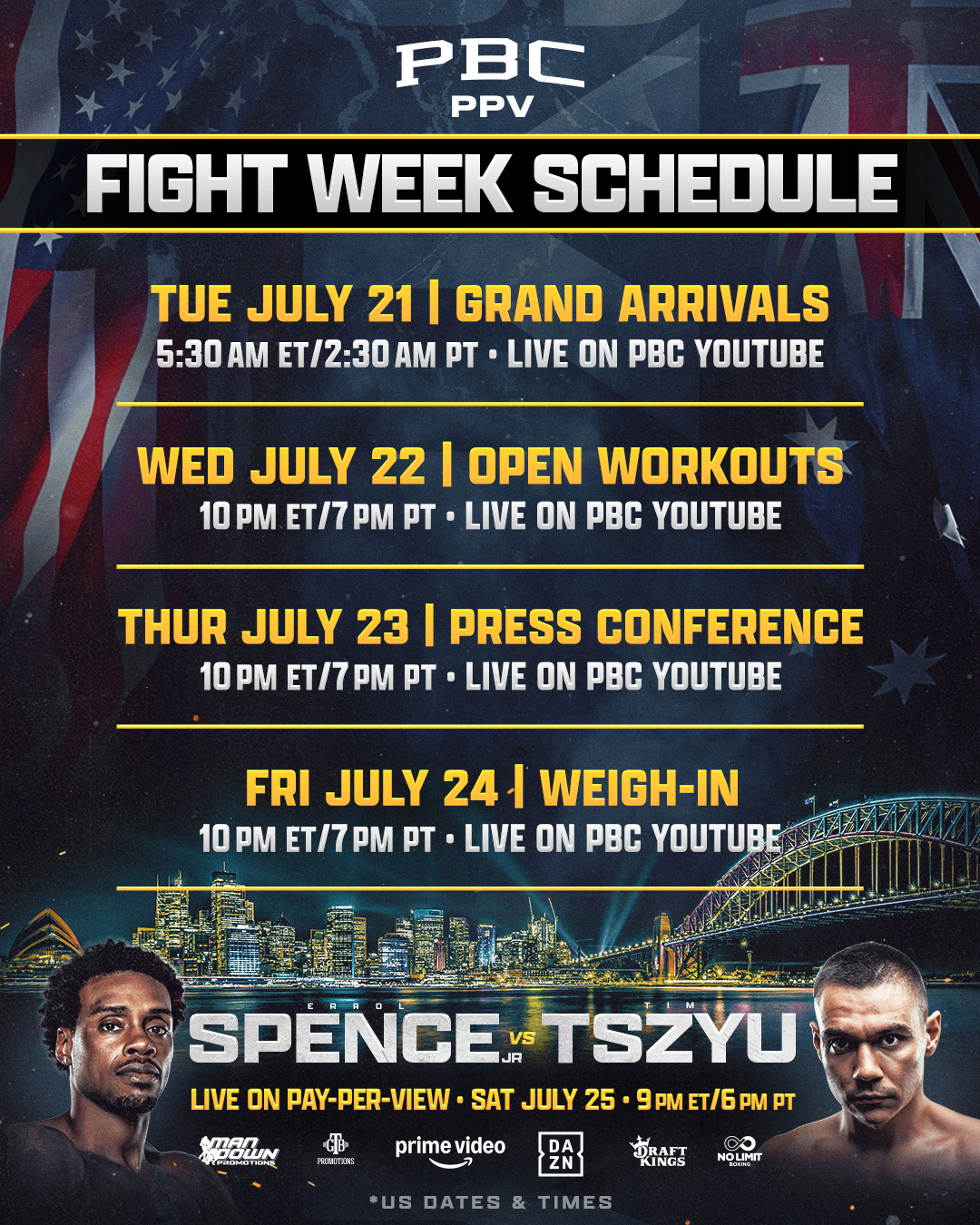
Errol Spence Jr. returns to the ring for the first time since 2023 and faces Tim Tszyu in a true crossroads fight. The fight will headline a card from New South Wales,Australia and is being broadcast live on DAZN and Amazon Prime PPV.
Official weights:
ERROL SPENCE JR. – 158
TIM TSZYU – 158
Both fighters are looking for a meaningful win, coming from different paths of disappointment.
Spence (28-1, 22 KOs) lost a one-sided contest with Terence Crawford in 2023 and stepped away from the sport for almost exactly three years. Tszyu (27-3, 18 KOs) lost his 154-lb. title to Sebastian Fundora in 2024 and ended up losing three of four fights, including a rematch with Fundora in 2025.
There was a brutal stoppage loss to Bakhram Murtazaliev for Tszyu in 2024 as well.
Since the second loss to Fundora, Tszyu has notched two decision wins against lesser opponents. Errol Spence Jr. represents a world-class name with an impressive resume.
But the biggest question going into this showdown is what Spence Jr. will look like at age 36 and coming off of a long layoff. The Texan had a serious car accident and had damage to one of his eyes to go along with the crushing defeat at the hands of Crawford.
The pace of the fight seems to be pretty easy to predict just by going off of past performances. Tszyu will press and throw a ton of punches. If he gets tagged, he will keep pressing and keep throwing a ton of punches.
The young Errol Spence Jr. could do just about anything in the ring. He outboxed Mikey Garcia and outslugged Yordenis Ugas. He has always been a difficult fighter from his left-handed stance, and the Ugas fight showed that he will fight fire with fire just as well as Tim Tszyu.
There will be fireworks early. If Spence can land the left hand with authority like Murtazaliev did, he’s in good shape. But Tszyu will be on the attack and he will return fire no matter what comes.
Spence Jr. took a lot of shots from Ugas in 2022 and showed toughness and resilience. Does he have those superpowers in 2026? That’s going to be the key to this fight. History says Spence Jr. will want to engage, fire back and beat Tszyu down. Will he be able to?
Or, will and older and wiser Errol Spence Jr. come in with a boxing-first plan and try to use his skills to avoid Tszyu’s rushes and do damage from the edges? We won’t know until the bell rings.
PREDICTION
I expect this fight to look a lot like Spence Jr. vs. Ugas. It may not start that way, but it will get there before too long. Tszyu is easy to predict, but much harder is what this version of Spence Jr. will be.
My rooting interest is with Spence Jr., but only slightly over Tszyu. I don’t want to see the once-great Errol Spence Jr. end his storied career with another loss. I’d also like to see Tim Tszyu get a big win on his resume and not have his career go completely south at age 31.
But my analysis leads me to predicting a win for Tim Tszyu and I think it will be by stoppage. With age and inactivity dogging Spence Jr., it seems like he sees the end a little more clearly than Tszyu. He has mentioned that this will be the end if it doesn’t go how he wants it to go. That could contribute to him retiring on his stool at some point if it is one-sided the other way.
After watching Tszyu’s fight with Murtazaliev, it was clear that the Australian takes a lot of shots from left hands. That’s one of Errol Spence Jr.’s specialties. That could rock Tszyu and put Spence Jr. in the vicious attack mode that could end the fight.
But I feel like Tszyu has too many X-factors in his favor. Age, activity, home-field advantage. These all line up pretty big for Tim Tszyu. I think he stops Errol Spence Jr.in the mid-to-late rounds.